TU Delft –
Design for Reciprocity
Masters Thesis part 2 | 2024
As strategic designers, we often analyze the various actors, objects, exchanges, and values that shape a design context or business strategy. But how often do we explore the social dynamics that emerge between these elements, the subtle interplay among actors, objects, values, and exchanges?
Project Aim: To support designers and social change pioneers in understanding and applying the concept of reciprocity.
Outcome: A clear and comprehensive booklet on designing for (generalized) reciprocity, complete with practical templates, real-world examples, and a step-by-step workflow.
Free PDF file – Design for Reciprocity Booklet
Keywords: Qualitative & quantitative research, reciprocity, social design, design ethnography, user research, interviews, value exchange, co-creation sessions, value mapping, trend analysis, data analysis
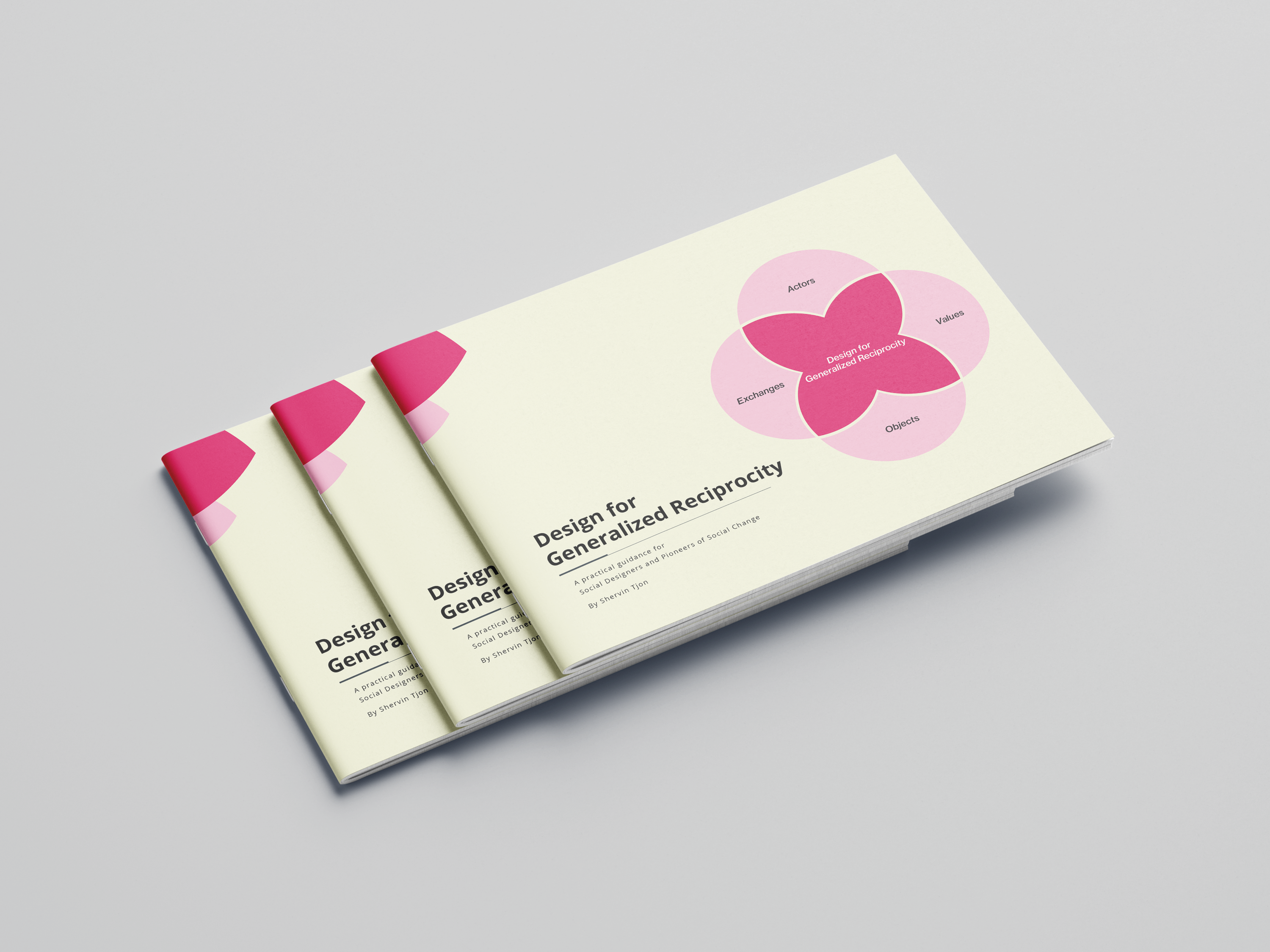
Booklet
What is Reciprocity?
Reciprocity is the mutual exchange of value, support, or actions between people or groups. It forms the basis of trust and sustained relationships—whether through tangible goods, emotional support, shared time, or recognition.
In strategic design, reciprocity goes beyond transactions. It includes social and symbolic exchanges that influence how stakeholders connect, collaborate, and co-create. Recognizing these dynamics helps designers create more meaningful, equitable, and enduring strategies.
Reciprocity isn’t just a “nice-to-have”—it’s a lens that enables strategic designers to see and shape the social fabric of systems. It helps move from designing for people to designing with them, fostering deeper engagement, shared value, and systemic change.
Types of Reciprocities
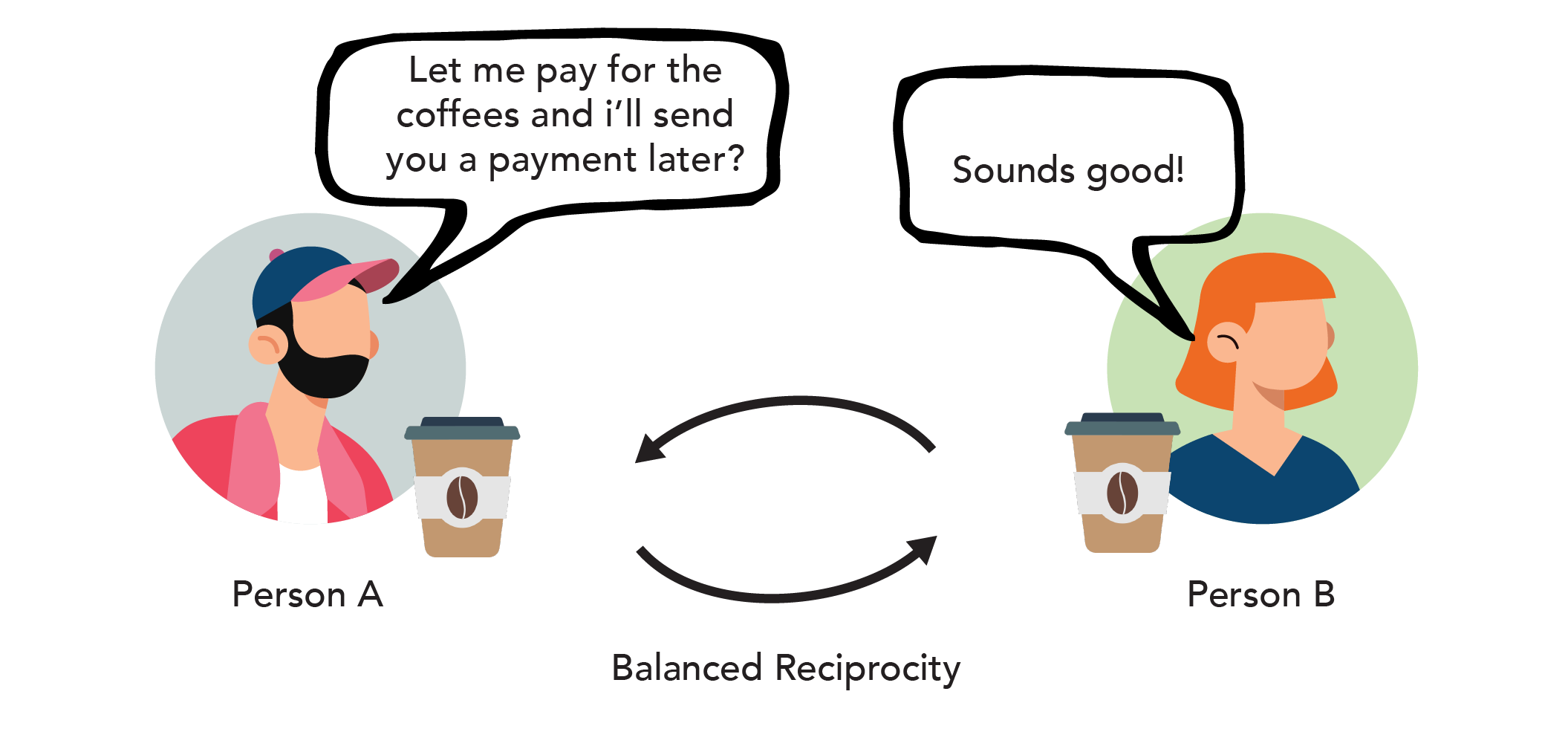
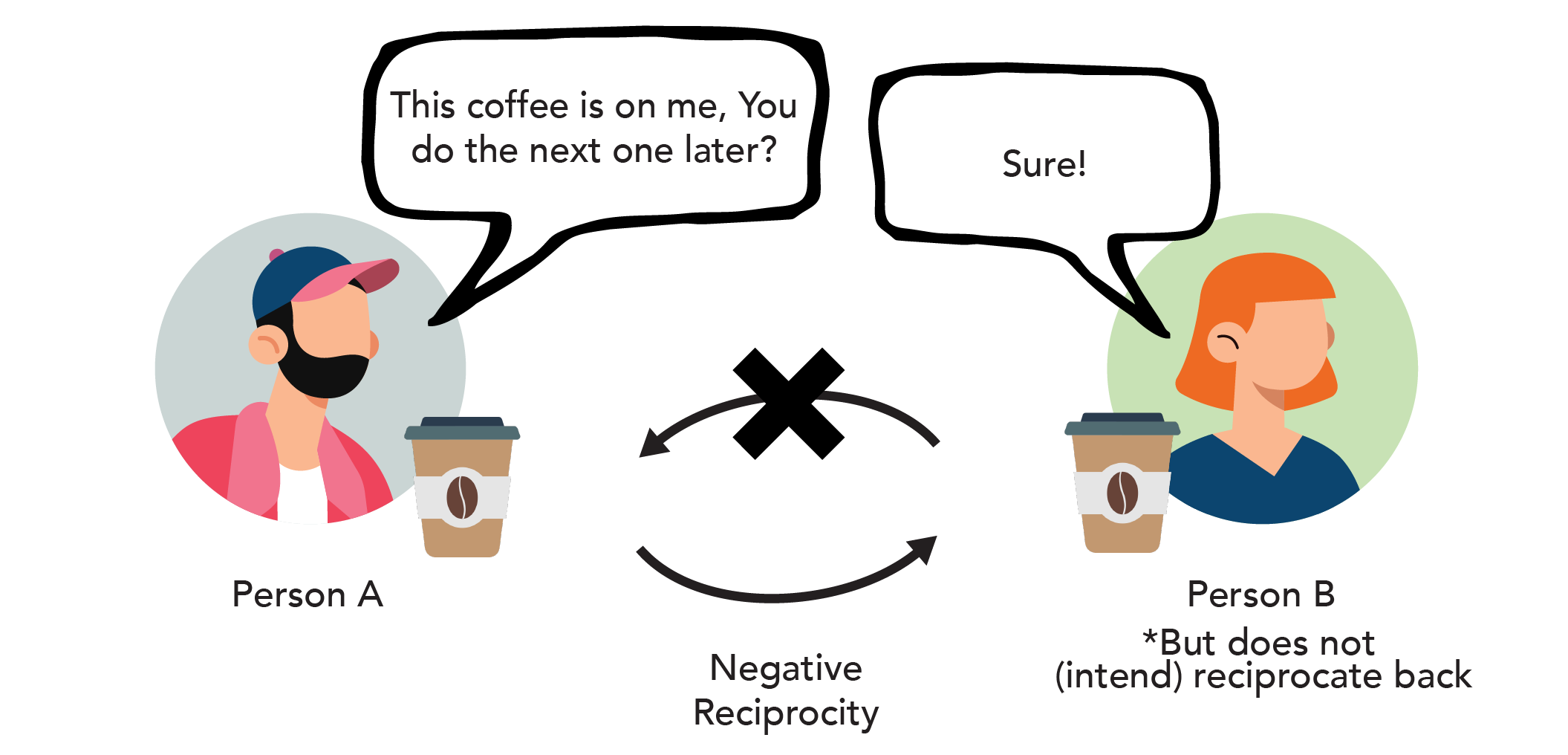
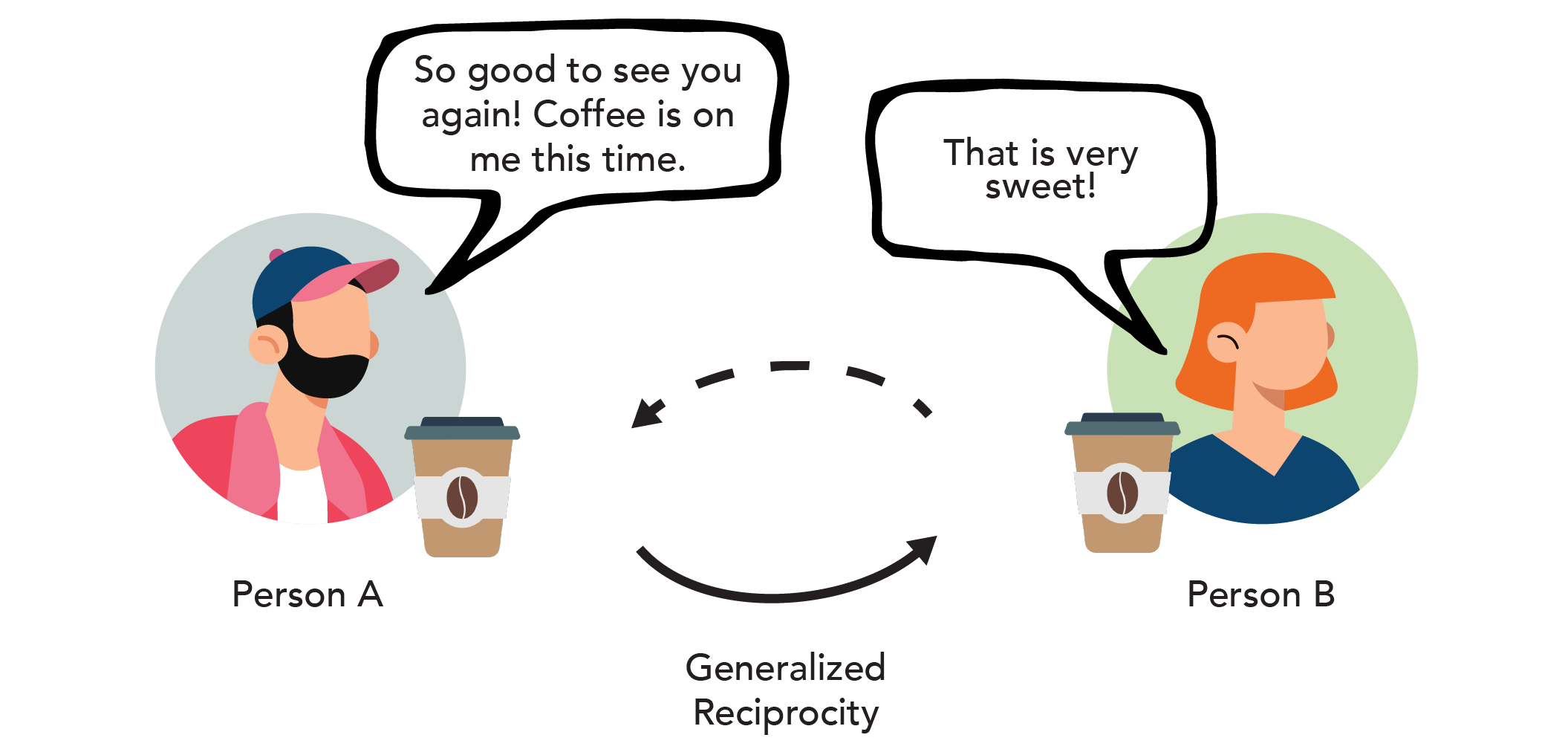
Generalized reciprocity
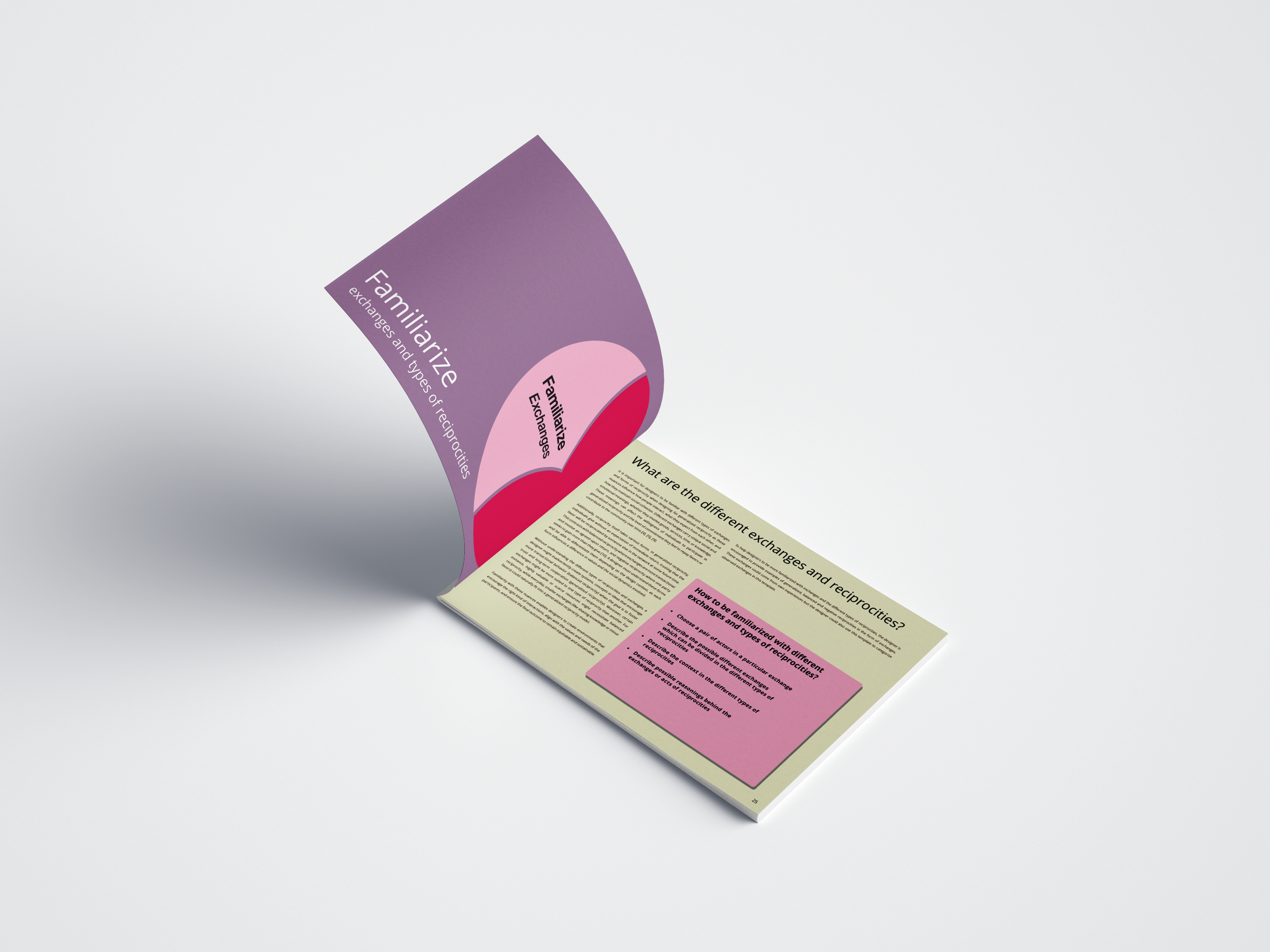
The booklet introduces three forms of reciprocity as defined by anthropologist Marshall Sahlins (1972): balanced reciprocity, negative reciprocity, and generalized reciprocity. While all three offer valuable insights into different modes of exchange, this project—and the accompanying Master’s thesis developed in collaboration with 2Ping—specifically focuses on generalized reciprocity.
Generalized reciprocity, which involves giving without an immediate or exact expectation of return, is a foundational element in building trust and fostering social cohesion.
In the context of strategic design, this form of reciprocity plays a crucial role in shaping long-term stakeholder relationships, encouraging collaboration, and supporting community-driven initiatives. By centering on generalized reciprocity, the project aims to help designers recognize and design for the subtle, trust-based exchanges that underpin meaningful and sustainable change.
Templates
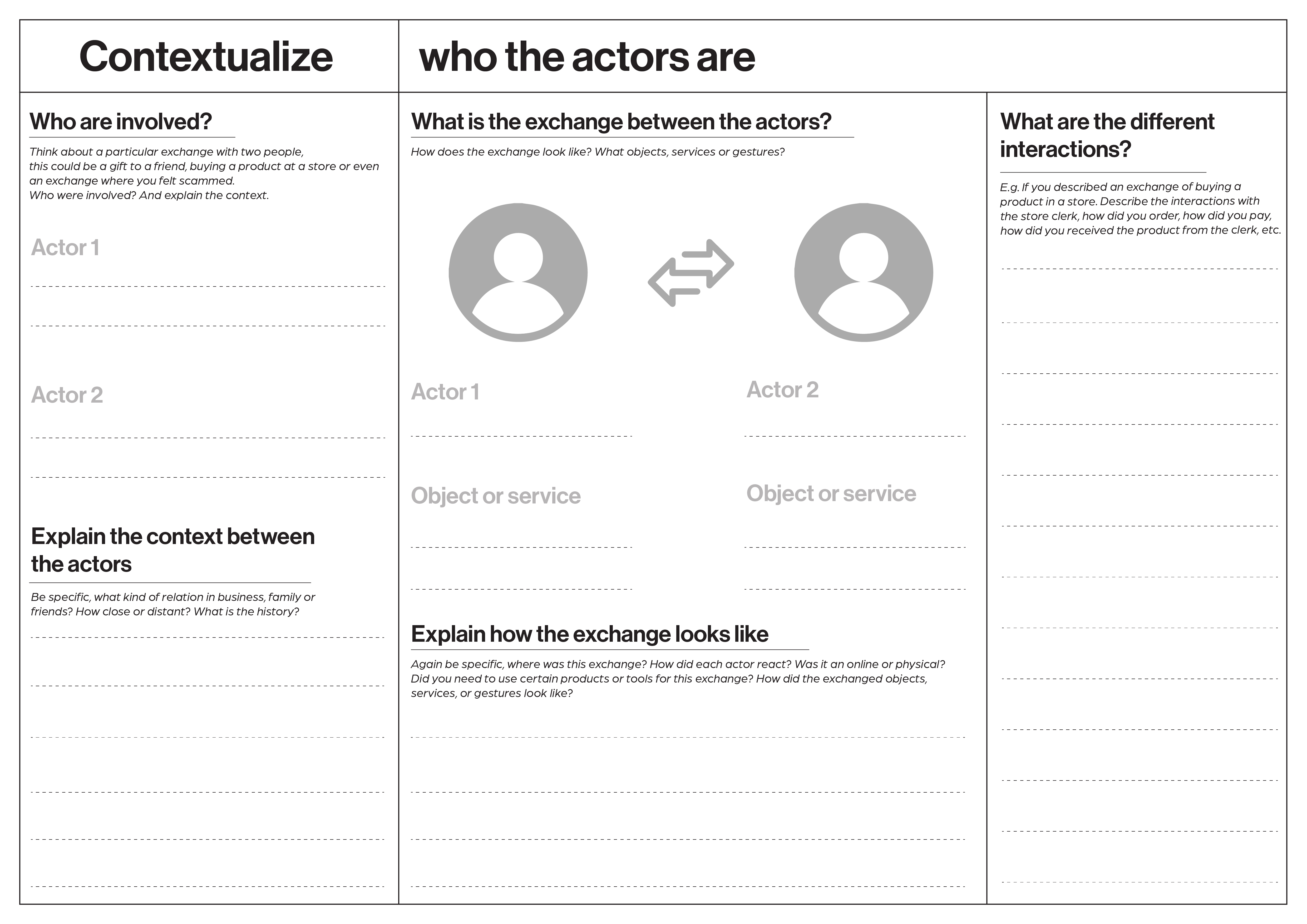
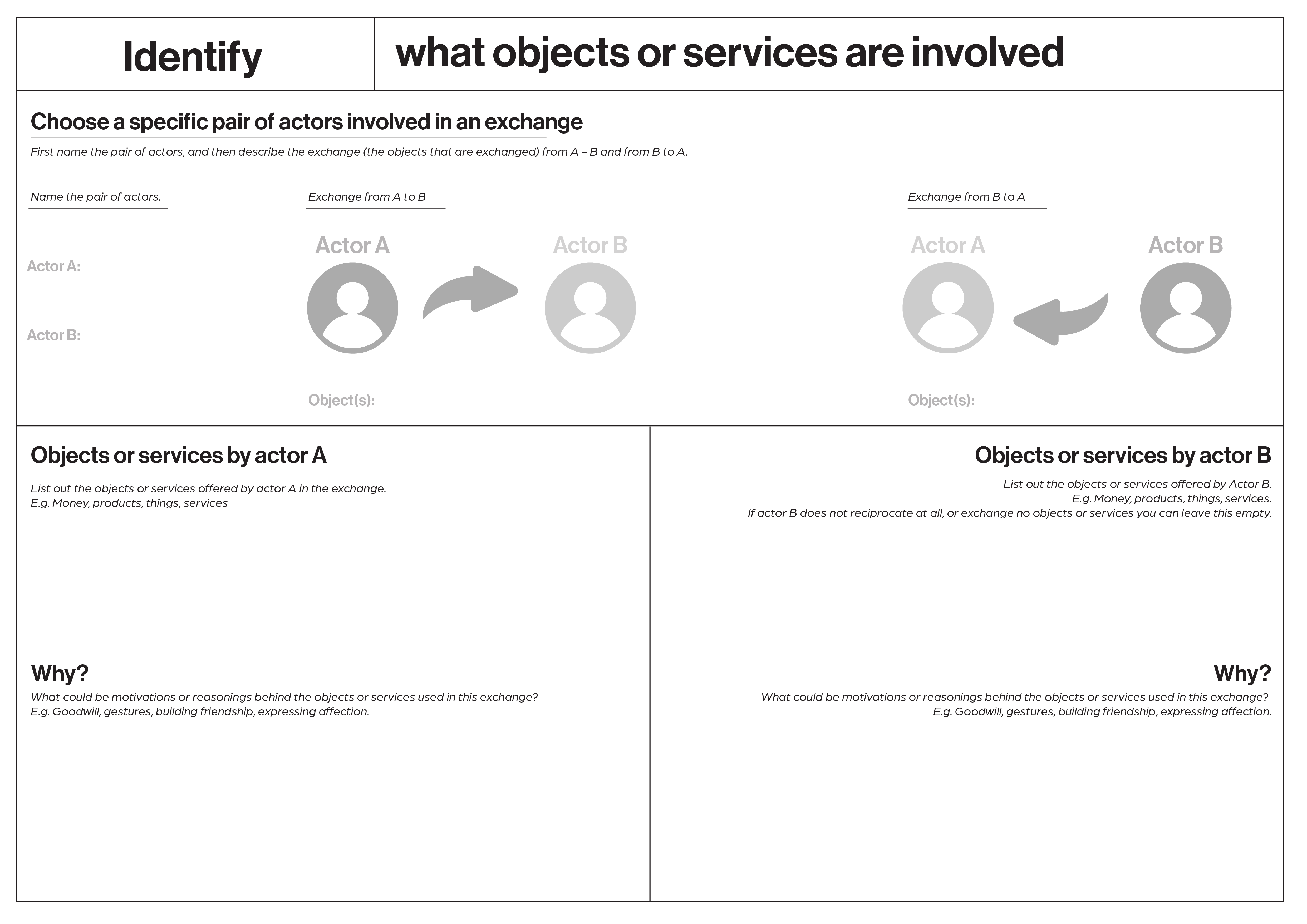
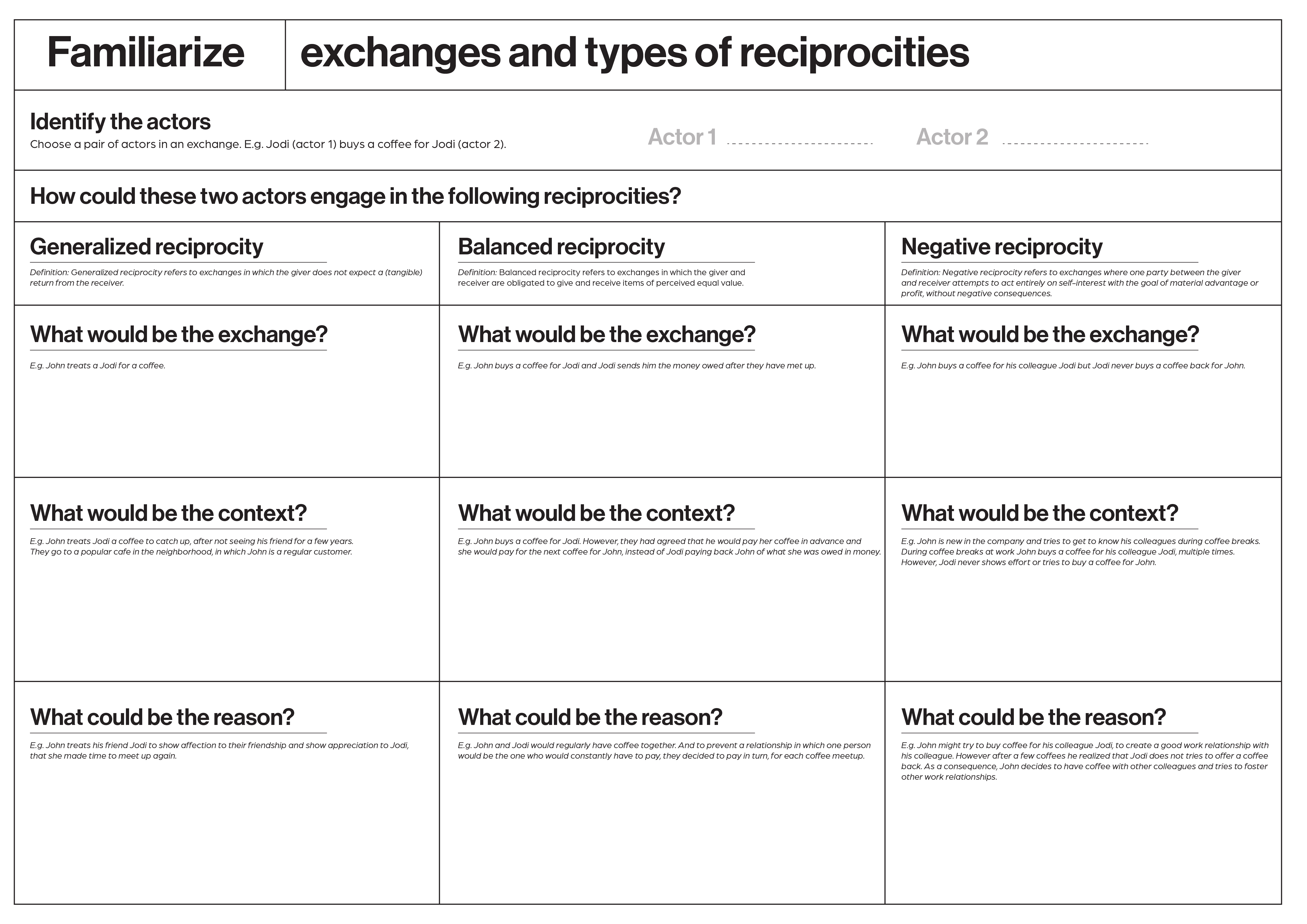
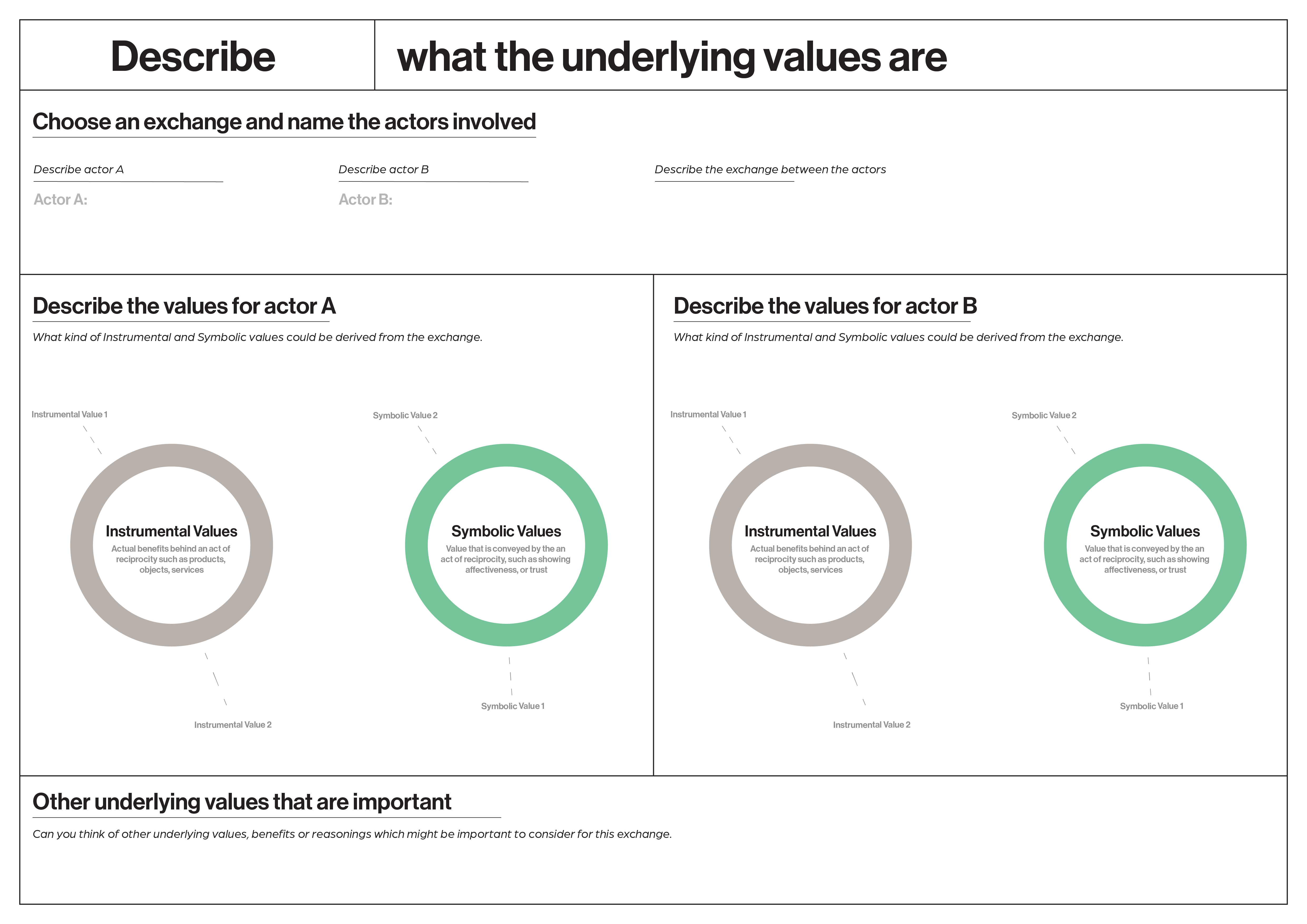
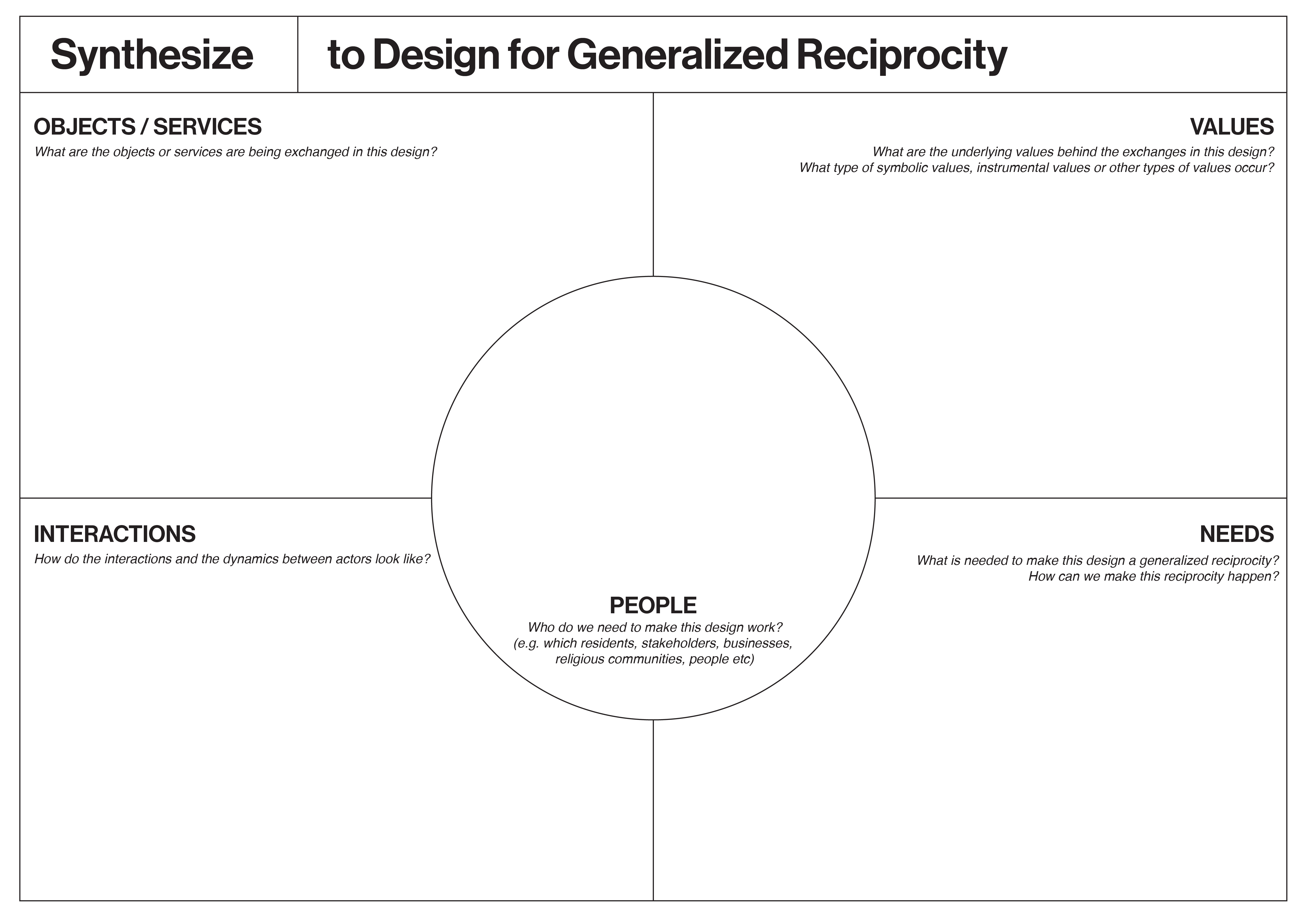
Reciprocity Templates
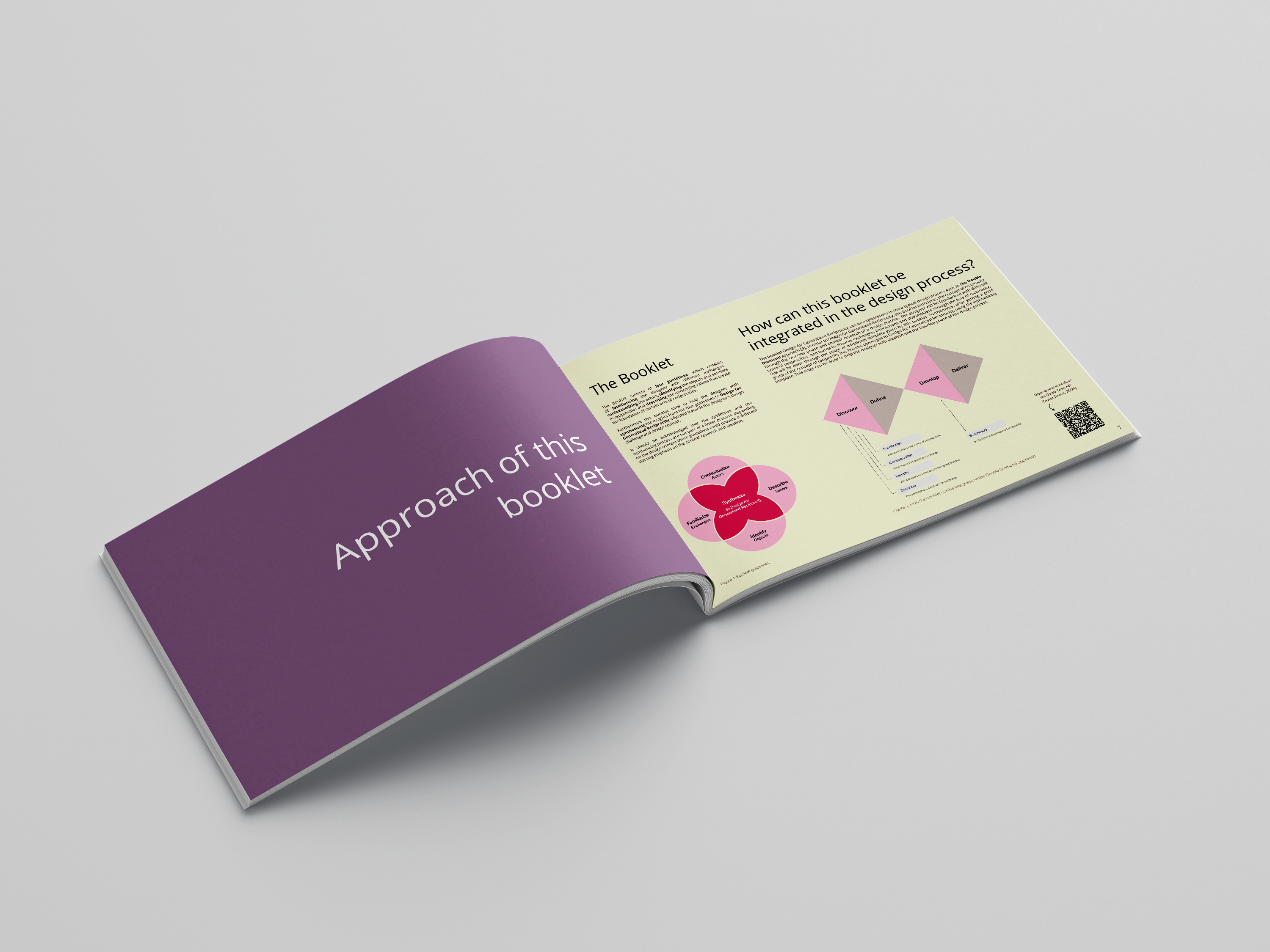
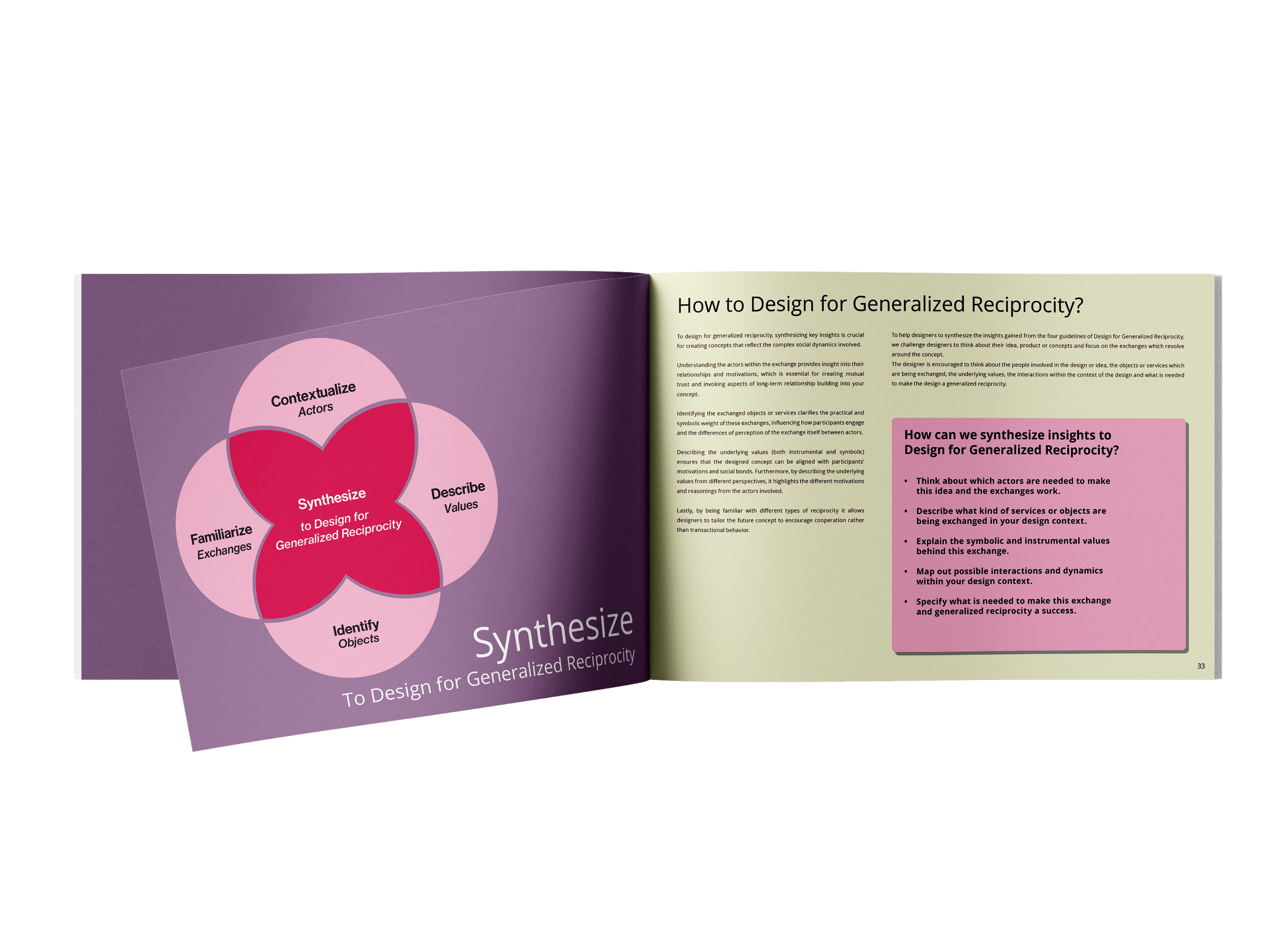
This booklet offers a framework and templates grounded in four key guidelines to support designers, as well as those active in social cooperatives, foundations, and community groups. These guidelines help users to:
- Contextualize and map the actors involved in exchanges and understand how these exchanges unfold.
- Identify the roles of objects, services, or resources within reciprocal interactions
- Familiarize and recognize different types of reciprocity relevant to the design context
- Describe the instrumental and symbolic values driving social exchanges
Finally the four guidelines help to Synthesize insights into a process-oriented approach for designing with reciprocity in mind.
 Shervin Tjon